Watercolor Meadow Wildflower Clipart: A Guide to Elegant Design Choices
Creating a cohesive visual identity for a spring wedding, a new brand, or a personal scrapbooking project often hinges on the quality of the assets you choose. When designers and creators search for Watercolor Meadow Wildflower Clipart, they are usually looking for more than just an image; they are seeking a specific mood. This elegant watercolor pink blue flower decorative clipart offers a soft, romantic feel that digital illustrations sometimes struggle to replicate. However, finding the right set is only half the battle. The real challenge lies in understanding how to integrate these hand-painted elements without compromising your design's integrity.
The Allure of Hand-Painted Botanical Elements
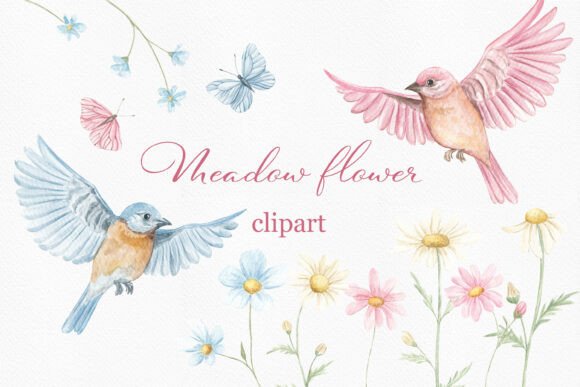
Why do so many professionals and hobbyists gravitate toward this style? The answer lies in the texture and emotion of watercolor. Unlike vector graphics, which can appear sterile or overly perfect, hand-painted artwork carries the subtle imperfections of human creativity. This collection features botanical wildflowers, birds, and butterflies that evoke the freshness of spring. For a wedding invitation suite, these elements suggest romance and natural beauty. For a small business owner launching a lifestyle brand, they communicate approachability and organic values.
The appeal extends beyond aesthetics to versatility. With 40 DIY elements included in a high-resolution format, you have the freedom to mix and match components. You can isolate a single pink bloom for a logo, combine several wildflowers for a border, or use a butterfly as a subtle accent in social media graphics. The transparent backgrounds ensure that these PNG files blend seamlessly into any layout, whether it is a digital presentation or a printed product.
Common Pitfalls in Selecting Digital Assets
Despite the abundance of resources available online, many creators make avoidable mistakes when purchasing or downloading clipart. These errors often stem from a lack of attention to technical specifications or a misunderstanding of licensing terms. One of the most frequent oversights is ignoring resolution requirements. Many users download images that look crisp on a screen but turn pixelated or blurry when printed. If you are planning to use these graphics for physical items like wedding invitations or scrapbook pages, low-resolution files will ruin the final product.
Another common misunderstanding involves color profiles. Watercolor art relies heavily on subtle gradients and washes. If the file is not optimized for print (CMYK) or if the RGB colors are too saturated for your printing method, the delicate pinks and blues may shift dramatically. What looks vibrant on your monitor might print as muddy or dull. This discrepancy can lead to wasted money on reprints and frustration with the perceived quality of the asset.
The Resolution Trap
Consider a scenario where a freelancer designs a branding package using low-quality clipart. The client loves the mockup on the website. However, when the logo is printed on business cards, the edges of the flowers appear jagged, and the details of the bird's wings disappear. This happens because the image was likely saved at 72 DPI, suitable for web use but insufficient for professional printing. To avoid this, always verify that your Watercolor Meadow Wildflower Clipart is provided at 300 DPI. This standard ensures that every brushstroke remains sharp and clear, even when scaled up for large formats.
Licensing and Usage Confusion
Beyond technical specs, there is the issue of usage rights. Many beginners assume that once they download a file, they can use it however they like. This is rarely the case. Some licenses restrict commercial use, while others prohibit reselling the digital files themselves. If you plan to create printable products for sale, such as scrapbooking kits or invitation templates, you must ensure the license explicitly allows for commercial application. Using restricted assets can lead to legal complications and damage your reputation as a professional creator.
Strategies for Better Design Outcomes
Avoiding these pitfalls requires a proactive approach to evaluation and implementation. Before committing to a purchase or download, take a moment to inspect the preview images closely. Look for the clarity of the edges and the depth of the colors. Does the pink blue flower decorative clipart show the necessary detail? Are the butterflies distinct against the background?
- Check the DPI: Ensure the product description explicitly states "300 DPI" or "high resolution." Do not rely on file size alone, as a large file can still be low quality if it is uncompressed but low-res.
- Test Transparency: Download a sample if possible, or check reviews to confirm the background is truly transparent. White halos around the flowers can ruin a design placed over a colored background.
- Verify Licensing: Read the terms of service carefully. Look for keywords like "commercial use," "resale allowed," or "unlimited projects."
- Assess Color Consistency: If you are matching the clipart to existing brand colors, compare the hex codes or Pantone references if available. Remember that screens and printers render colors differently.
Practical Application for Various Projects
Once you have secured high-quality assets, the next step is effective integration. The 40 DIY elements in this collection offer a wealth of possibilities, but they should be used intentionally. For wedding invitations, less is often more. Instead of cluttering the page with every element, select a few key motifs—a cluster of wildflowers and a single bird—to frame the text. This creates a balanced, elegant composition that honors the romantic feel of the watercolor style.
In branding and logo design, simplicity is key. A complex arrangement of flowers might work for a social media graphic, but for a logo, you need something scalable and recognizable. Use the isolated flower elements to create a clean icon that retains its character even at small sizes. The soft, hand-painted nature of the artwork adds a unique touch that sets your brand apart from competitors using generic stock vectors.
For scrapbooking and printable products, the variety of elements allows for creative layering. You can create depth by overlapping leaves, stems, and butterflies. Because the backgrounds are transparent, you can place these elements over photos or textured paper scans without worrying about white boxes obscuring your memories. Just remember to maintain the 300 DPI standard throughout your workflow to ensure your printed albums look professional.
Making the Right Choice
Selecting the right digital assets is a critical decision that impacts the success of your creative projects. By understanding the importance of resolution, color accuracy, and licensing, you can avoid the common frustrations that plague many designers. The Watercolor Meadow Wildflower Clipart described here offers a robust solution for those seeking elegance and versatility. With its high-resolution PNGs and diverse range of botanical and fauna elements, it provides a solid foundation for everything from intimate wedding decor to expansive marketing campaigns.
Taking the time to evaluate these factors before you buy or download saves you time, money, and stress in the long run. It ensures that your final designs reflect the care and professionalism you intend to convey. Whether you are a seasoned marketer or a hobbyist starting your first scrapbook, investing in quality assets is the first step toward creating work that truly resonates.